
How to Grade Old U.S. Banknotes: The Complete Beginner’s Guide (With Examples)
Grading is one of the most important skills any collector of U.S. banknotes must learn. A note’s grade directly affects its value, desirability, and long-term investment potential. Yet many beginners feel overwhelmed by terms like “Choice Uncirculated 64,” “Very Fine 25,” or “Exceptional Paper Quality (EPQ)”.
This beginner-friendly guide breaks grading down into clear, simple steps—so you can confidently evaluate any old U.S. banknote, whether you’re collecting raw notes or shopping for certified pieces on RareUSBanknotes.com.
What Is Banknote Grading? (Grade Old U.S. Banknotes)
Banknote grading is the process of evaluating a note’s condition and assigning it a standardized numerical or qualitative grade.
Grades tell buyers how much wear, how sharp the paper is, how clean the note is, and whether it has problems, tears, stains, pinholes, or other defects.
Today, most collectors use the 70-point Sheldon scale—the same system used by PCGS Banknote and PMG.
Understanding the Grading Scale (1–70)
Uncirculated Grades (60–70)
These notes show no circulation wear.
- 70 – Gem Uncirculated
Perfect margins, perfect paper, perfectly centered. Rare. - 67–69 – Superb Gem Uncirculated
Premium quality with exceptional eye appeal. - 65–66 – Gem Uncirculated
Strong centering, crisp paper, no flaws. - 63–64 – Choice Uncirculated
Slight handling marks allowed. - 60–62 – Uncirculated
May show counting flicks, light handling, or minor corner disruptions.
Example:
A 1934 $1000 bill graded PMG 64 EPQ often sells for thousands more than one graded 58.
-
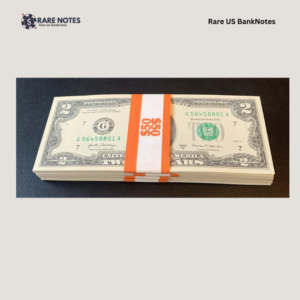
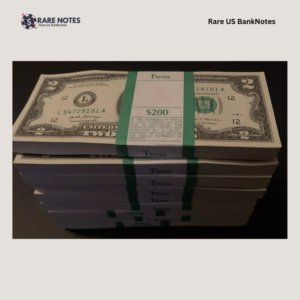
(25) 2017 $2 Bills – Uncirculated & Sequential | Crisp U.S. Banknotes for Collectors
Price range: $69 through $230 -
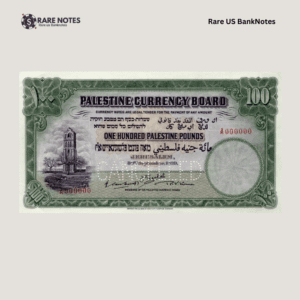
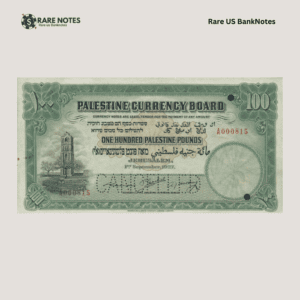
100 Palestine Pounds Banknote – Palestine Currency Board
Original price was: $8,740.$8,455Current price is: $8,455. -
-

About Uncirculated / Almost Uncirculated (50–59)
These notes look uncirculated but show very faint traces of wear, usually on the corners or folds.
- Popular among collectors who want high eye appeal at a lower price.
Extremely Fine (40–49)
- Paper remains crisp
- Two or three light folds allowed
- Very attractive notes in this range
Collectors often call this the best balance of quality + affordability.
Very Fine (20–39)
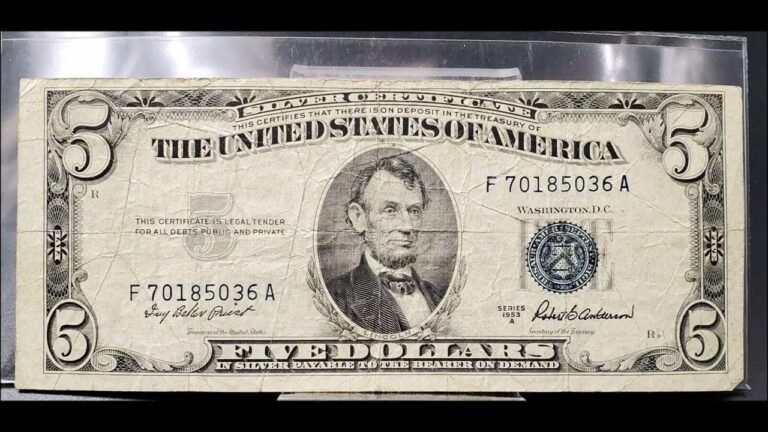
- Noticeable folds
- Light soil or handling
- Still retains a solid structure and nice details
This is a very common grade for early large-size notes (1861–1923).
Fine (12–19)
- Multiple folds and wear
- Some softness in the paper
- Completely intact but clearly circulated
Affordable entry-level grade.
Very Good (8–11)
- Significant wear
- Rounded corners
- Small tears possible
- All major elements are still visible
Often seen on heavily circulated Silver Certificates and Legal Tenders.
Good (4–7)
Poor–Fair (1–3)
- Severely damaged notes
- Missing pieces
- Excessive staining
Usually only collected if extremely rare.
What Affects a Banknote’s Grade?
Grading considers multiple attributes, including:
1. Paper Quality
Is the paper crisp or limp? Original or pressed?
2. Folds & Creases
How many, how deep, and where they are.
3. Margins & Centering
Well-centered notes receive higher grades.
4. Color & Ink Brightness
Sharp details help increase visual appeal.
5. Stains, Holes, Tears
Any problems lower the grade.
6. Writing or Marks
Initials, teller stamps, or graffiti drop value.
How to Grade a Banknote Yourself (Step-by-Step)
Step 1 — Inspect Under Neutral Light
Use bright white lighting. Avoid yellow or warm lighting that hides defects.
Step 2 — Look for Folds
Hold the note sideways. Creases will reflect light.
Step 3 — Check the Paper’s Crispness
Gently flex the paper. Crisp paper indicates a higher grade.
Step 4 — Examine Corners and Edges
Rounded or frayed corners suggest wear.
Step 5 — Look for Problems
Holes
Tears
Stains
Rust
Tape
Writing
Pressed paper
Washed paper
Step 6 — Compare to Known Standards
Look at PCGS/PMG population reports or online examples to calibrate your eye.
Certified (Slabbed) vs Raw Notes — Which Should You Buy?
1899 $1 Silver Certificate – Large Size | Blue Seal | “Black Eagle”
Original price was: $616.55.$578.55Current price is: $578.55.1899 $2 Large Size Silver Certificate – Blue Seal | Uncirculated
Original price was: $1,501.$1,330Current price is: $1,330.1899 $2 Silver Certificate – “Mini Porthole” | PMG 25 | Bright & Attractive
Original price was: $712.50.$624.15Current price is: $624.15.1899 $2 Silver Certificate – Mini Porthole | Fr.256 | PCGS-Certified
Original price was: $503.50.$478.33Current price is: $478.33.1899 $5 Silver Certificate | Large Size | “Chief” Note
Original price was: $570.$541.50Current price is: $541.50.1899 1 Dollar Silver Certificate | Black Eagle | Error Printing
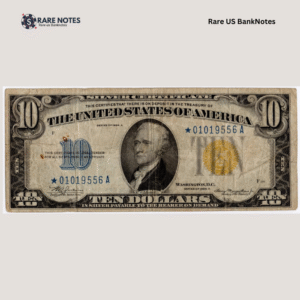
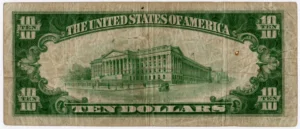
Original price was: $421.80.$400.71Current price is: $400.71.1934A $10 Silver Certificate North Africa Emergency Issue ★ Star Note – Fr.2309
Original price was: $220.77.$198.69Current price is: $198.69.1957 $1 Silver Certificate Star Note | Blue Seal | Old US Bill
Original price was: $958.55.$863.55Current price is: $863.55.




Certified Notes Are Best When:
- The note is expensive (over $300)
- You want guaranteed authenticity
- You plan to resell later
- You want confidence in the grade
Raw Notes Are Best When:
- You trust the seller
- You want a good price
- You enjoy grading yourself
- You collect budget-friendly notes
RareUSBanknotes.com sells both certified and raw options depending on preference.
Examples of Notes and Their Grades
Example 1 — 1934 $10 Silver Certificate (North Africa)
- Notes graded PMG 40 EPQ sell much higher than those in Fine 12.
- Fold count and paper quality make the difference.
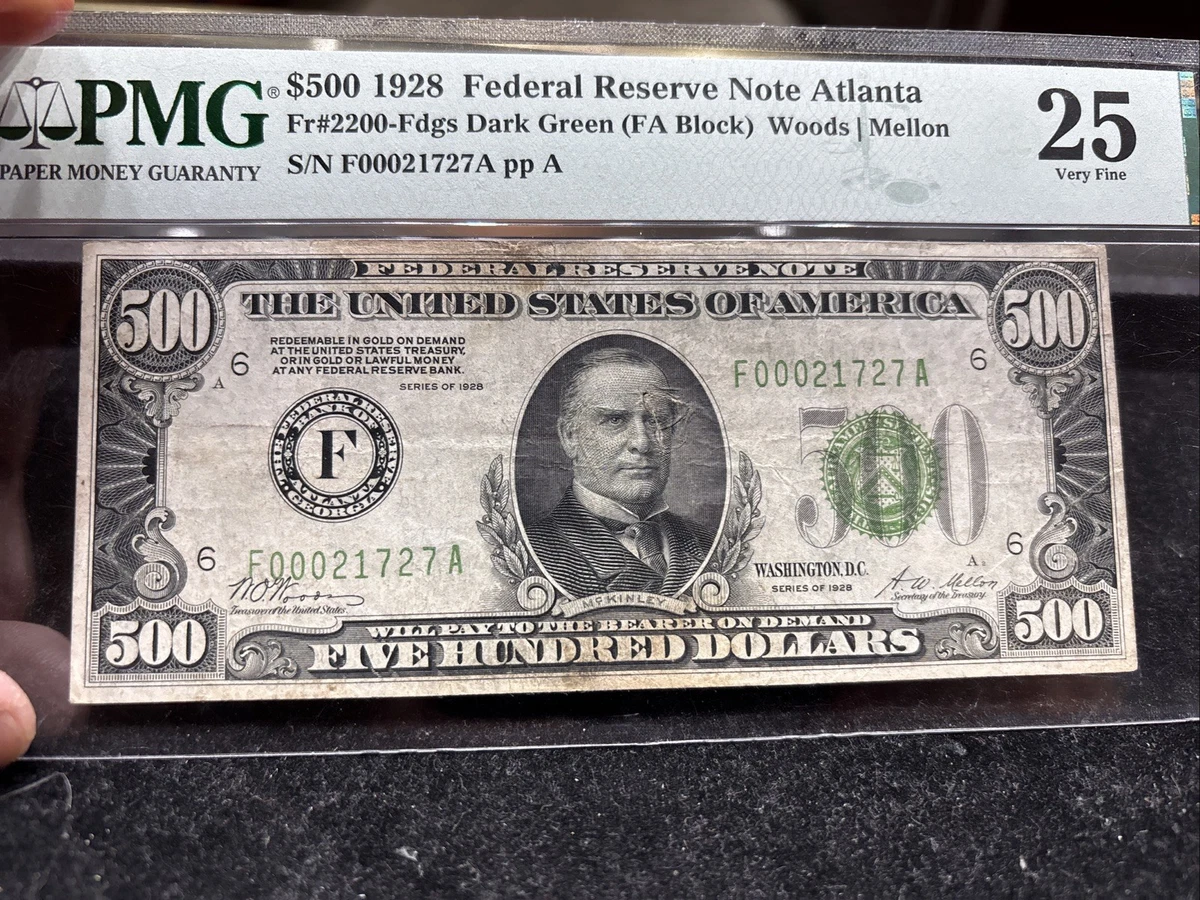
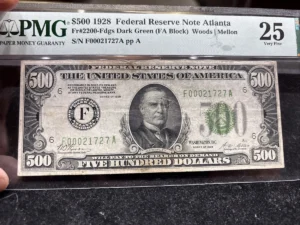
Example 2 — 1928 $500 Federal Reserve Note
- A PCGS 35 can look much nicer than expected.
- A PMG 64 can sell for 4–10× higher, depending on the district.
Example 3 — Large-Size Legal Tender Note
- Scarce notes often appear in grades 4–12 due to heavy circulation.
Should You Clean or Flatten a Note?
Never clean, iron, wash, press, or chemically treat banknotes.
Doing so destroys originality and significantly reduces value.
Key Takeaways on Grade Old U.S. Banknotes
- Grading determines value more than almost anything else.
- Uncirculated (60–70) costs a premium but provides the best long-term value.
- Fine (12–19) is a great entry point for collectors on a budget.
- Learn folds, paper quality, centering, and defects.
- When in doubt, choose certified notes from trusted sellers.
Browse Links to our key Pages
Links to:
- High Denomination Notes category
- Silver Certificates category
- Error Notes page
- Raw vs Certified Notes Page
- New Arrivals Page