
💵 $5 Silver Certificate Value Guide (Series 1886–1953B) — How Much Is Yours Worth?
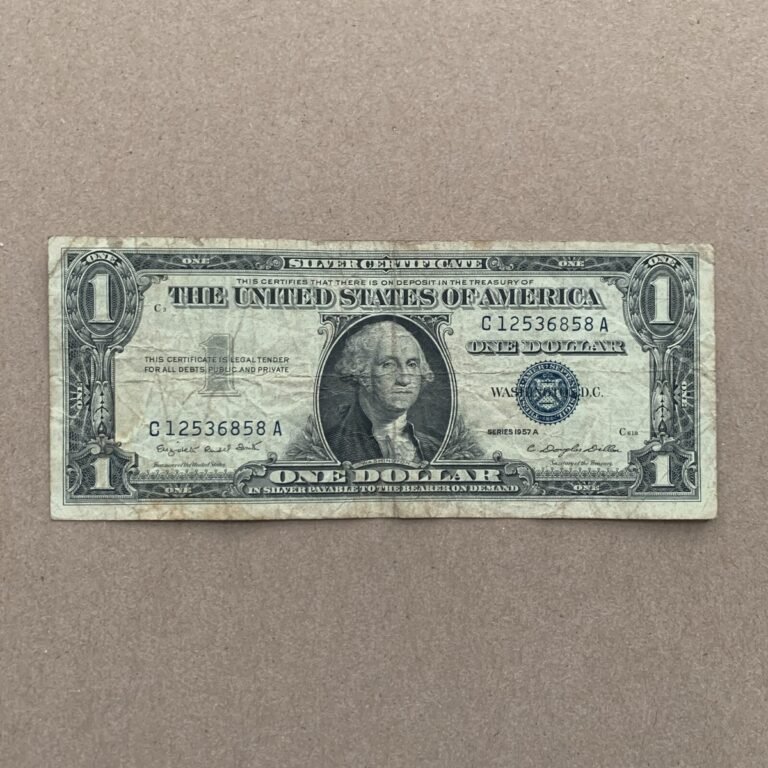
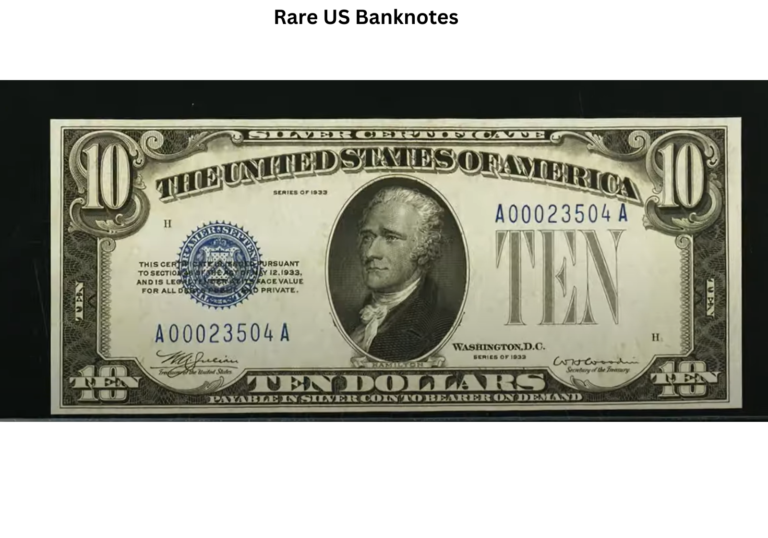
If you have a $5 Silver Certificate, you might be holding a surprisingly valuable piece of U.S. currency history. These notes were issued between the late 19th century and 1953, and many collectors actively seek them for their beautiful designs, rarity, and silver-backed promise.
Depending on the series, condition, seal variety, and star designations, your $5 Silver Certificate may be worth anywhere from $12 to over $15,000.
This guide will walk you through everything you need to know.
Quick Answer: What Is a $5 Silver Certificate Worth?
Most $5 Silver Certificates printed after 1934 are worth $12–$30 in circulated condition.
Earlier large-size notes (1886–1923) can be worth hundreds or thousands, especially with iconic designs like the Educational Series, Indian Chief, and Five Dollar Silver Porthole notes.
Here is the quick value breakdown:
| Series | Type | Common Value Range | Rare Value Range |
|---|---|---|---|
| 1886 | Large Size | $400–$3,000 | $10,000+ |
| 1891 | Large Size | $150–$1,200 | $8,000+ |
| 1896 | Educational | $1,000–$5,000 | $15,000+ |
| 1899 | Indian Chief / Running Antelope | $300–$2,500 | $10,000+ |
| 1923 | Last Large Size | $80–$500 | $3,000+ |
| 1934 / 1934A | Small Size | $12–$25 | $150+ (stars) |
| 1953 / A / B | Small Size | $12–$30 | $200+ (stars) |
If your note is a large-size $5 Silver Certificate, it could be extremely valuable.
If it’s a small-size blue seal note (1934 or 1953), its value depends heavily on condition and star status.
-
1899 $1 Silver Certificate – Large Size | Blue Seal | “Black Eagle”
Original price was: $616.55.$578.55Current price is: $578.55. -
1899 $2 Large Size Silver Certificate – Blue Seal | Uncirculated
Original price was: $1,501.$1,330Current price is: $1,330. -
1899 $2 Silver Certificate – “Mini Porthole” | PMG 25 | Bright & Attractive
Original price was: $712.50.$624.15Current price is: $624.15. -
1899 $2 Silver Certificate – Mini Porthole | Fr.256 | PCGS-Certified
Original price was: $503.50.$478.33Current price is: $478.33.


Understanding $5 Silver Certificates
$5 Silver Certificates were promises from the U.S. Treasury stating that the bearer could redeem the note for $5 worth of silver. The designs vary greatly depending on the era:
Large Size Certificates (1886–1923)
- Intricate engravings
- Oversized dimensions
- Some of the most beautiful notes ever issued
- Highly collectible
Small Size Certificates (1934–1953)
- Blue seal
- More modern appearance
- Common in lower grades
- High-grade star notes fetch premiums
Collectors divide them into these major categories below.
Value Breakdown by Series (Complete Guide)
🟦 Large Size $5 Silver Certificates — The Most Valuable (1886–1923)
1886 $5 Silver Certificate — “Morgan Back.”
One of the earliest and scarcest $5 silver notes.
Value:
- Circulated: $400–$3,000
- High-Grade: $7,000+
- Rare Varieties: $10,000–$25,000+
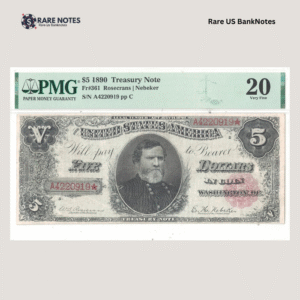
1891 $5 Silver Certificate
Features the portrait of General George H. Thomas.
Value:
- Circulated: $150–$1,200
- High Grade: $5,000+
- Star Notes / Rare Blocks: $8,000+
1896 $5 Educational Series
Considered one of the most beautiful U.S. banknotes ever created.
Value:
- Circulated: $1,000–$3,000
- Extremely Fine+: $7,000+
- Gem Uncirculated: $15,000–$25,000+
1899 $5 Silver Certificate — “Indian Chief Note.”
One of the most famous and sought-after U.S. notes.
Value:
- Circulated: $300–$2,500
- Choice Uncirculated: $5,000+
- Rare Blocks: $10,000+
1923 $5 Silver Certificate
The final large-size silver certificate series.
Value:
- Circulated: $80–$500
- High Grade: $1,500–$3,000+
🟦 Small Size $5 Silver Certificates — Common but Collectible (1934–1953B)
These represent the type most collectors encounter.
1934 & 1934A $5 Silver Certificate Value
These notes are abundant, but high-grade examples and star notes have good premiums.
Value:
- Circulated: $12–$25
- Uncirculated: $40–$100
- Star Notes: $75–$200+
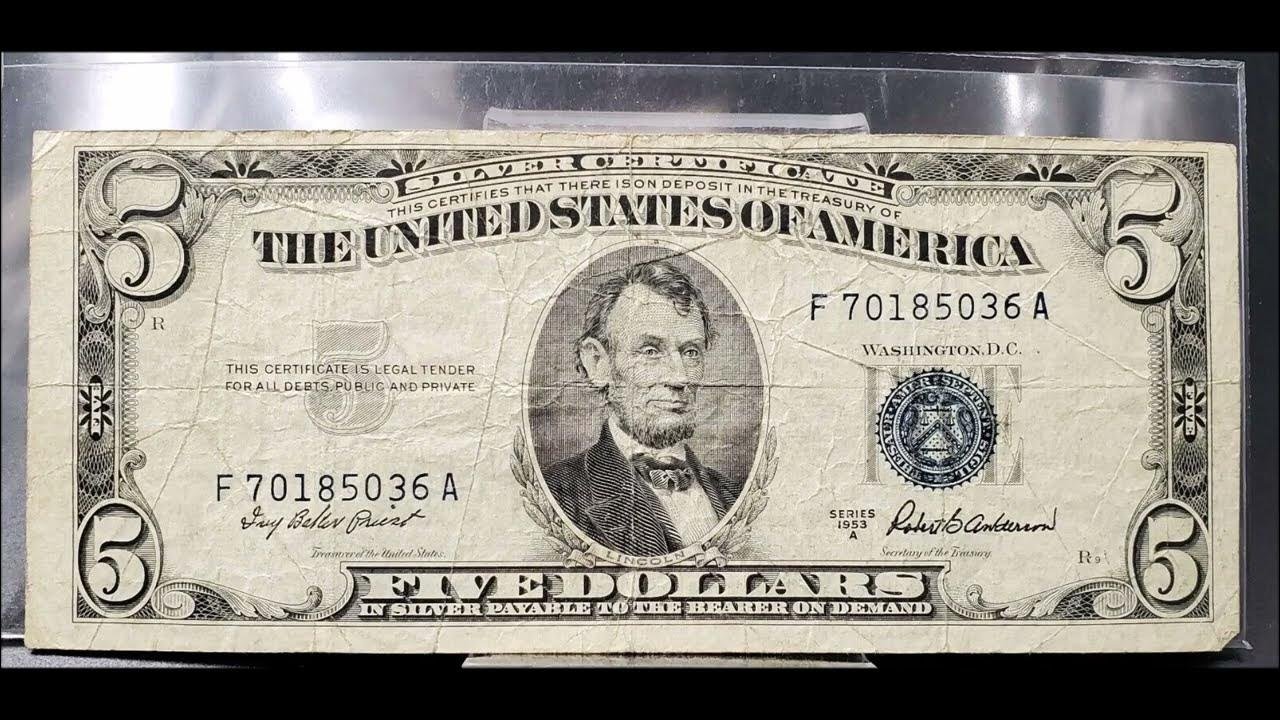
1953, 1953A, 1953B $5 Silver Certificate Value
These are the most common and affordable.
Value:
- Circulated: $12–$30
- Uncirculated: $35–$85
- Star Notes: $100–$250+
Uncirculated star notes from the 1953 series can reach $300+ in auctions.
Star Notes — The Hidden Gems
Star notes replace misprinted notes during production and are instantly more collectible.
🔍 How to Identify
Look at the serial number:
If it ends in ★, it’s a star note.
⭐ Star Note Values
- Common series: $40–$120
- Scarcer stars: $150–$400
- Large-size stars: $2,000–$20,000+
Star notes ALWAYS command premiums, even in low grade.
How to Determine Your $5 Silver Certificate’s Value
✔ 1. Identify the Series Year
1934 and 1953 notes are common.
Anything before 1923 is potentially VERY valuable.
✔ 2. Check for Star Notes
Stars = instant premiums.
✔ 3. Assess Condition (Grade)
Crisp notes with no folds can be worth 3×–10× more.
✔ 4. Look for Fancy Serial Numbers
Low numbers, radars, repeaters, ladders, etc., increase value.
✔ 5. Verify If It’s a Large Size Note
Large notes are almost always far more valuable.
Errors and Rare Varieties
Some $5 Silver Certificates carry errors such as:
- Misaligned seals
- Inverted serial numbers
- Cutting errors
- Ink smears
These errors can add $50 to $2,000+, depending on severity and grade.
Should You Get Your $5 Certificate Graded?
You should grade the note if:
- It’s a large-size note
- It’s Uncirculated
- It’s a star note
- It has a rare block or plate combination
- It’s worth over $200
PMG and PCGS grading can dramatically increase resale value.
Where to Sell a $5 Silver Certificate
Top places to sell:
- Rareusbanknotes.com
- eBay auctions
- Facebook currency groups
- Heritage Auctions
- Stack’s Bowers
- Local currency shows
Large-sized notes should always be sold through auction houses for maximum value.
Frequently Asked Questions
Are $5 Silver Certificates rare?
Some are extremely rare, especially large-sized and star notes.
Can you still redeem them for silver?
No — silver redemption ended in 1968.
Are they still legal tender?
Yes, but spending them is NOT recommended due to collector value.
What is the most valuable $5 Silver Certificate?
The 1896 Educational Series and 1899 Indian Chief starred notes are among the highest in value.
Why do some sell for thousands?
Scarcity, demand, condition, serials, and historical appeal drive the price.
-
1899 $1 Silver Certificate – Large Size | Blue Seal | “Black Eagle”
Original price was: $616.55.$578.55Current price is: $578.55. -
1899 $2 Large Size Silver Certificate – Blue Seal | Uncirculated
Original price was: $1,501.$1,330Current price is: $1,330. -
1899 $2 Silver Certificate – “Mini Porthole” | PMG 25 | Bright & Attractive
Original price was: $712.50.$624.15Current price is: $624.15. -
1899 $2 Silver Certificate – Mini Porthole | Fr.256 | PCGS-Certified
Original price was: $503.50.$478.33Current price is: $478.33.
Conclusion
$5 Silver Certificates are a rewarding collectible category with values ranging from affordable to extremely valuable. Understanding the series, condition, and rarity features can help you accurately identify your note’s true worth.