
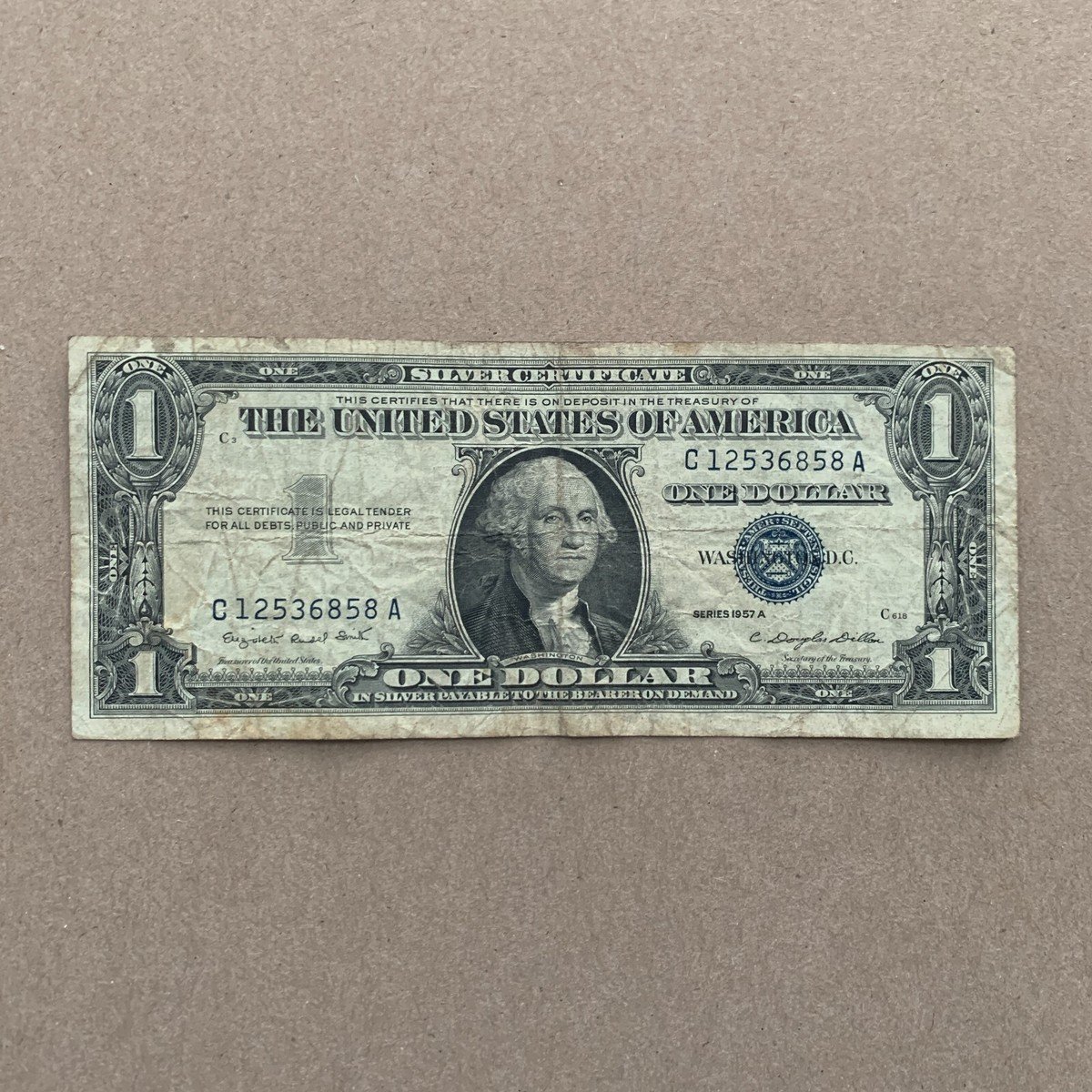
$1 Silver Certificate vs. $1 Blue Seal Note – What’s the Difference? (Full Comparison & Value Guide)
A Silver Certificate vs Blue Seal Note is a U.S. banknote issued from 1878–1957, redeemable for silver, and simply the modern name collectors use for the late-series
A complete collector’s guide to history, design, values, rarity, and how to tell them apart
Short Answer
A $1 Silver Certificate (blue seal) is an older U.S. banknote once redeemable for silver. A $1 Blue Seal Federal Reserve Note (also blue seal, but different wording) is a later note issued by the Federal Reserve and not backed by silver. Silver Certificates are generally more valuable, especially 1928 and 1934 series examples, star notes, and high-grade specimens. Most Blue Seal FRNs are worth $1–$3, with a few rare exceptions.
Below is a deep comparison, including detailed history, print runs, value tables, how to identify each note, and collector insights.
What is a $1 Silver Certificate?
A Silver Certificate was a type of U.S. banknote issued from 1878–1964 and redeemable for silver dollars (until 1933) or silver bullion (until 1968).
All modern-collector $1 examples come from:
- 1928 Silver Certificate (Funnyback reverse)
- 1934 Silver Certificate
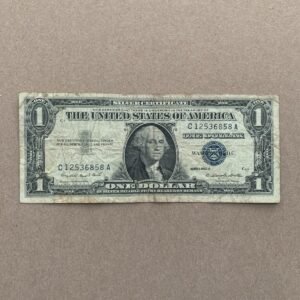
- 1957, 1957A, 1957B Silver Certificates
Key Features
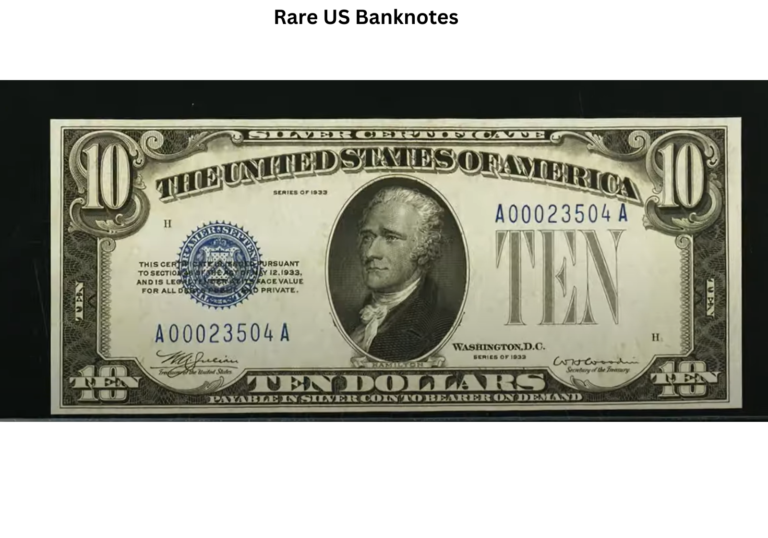
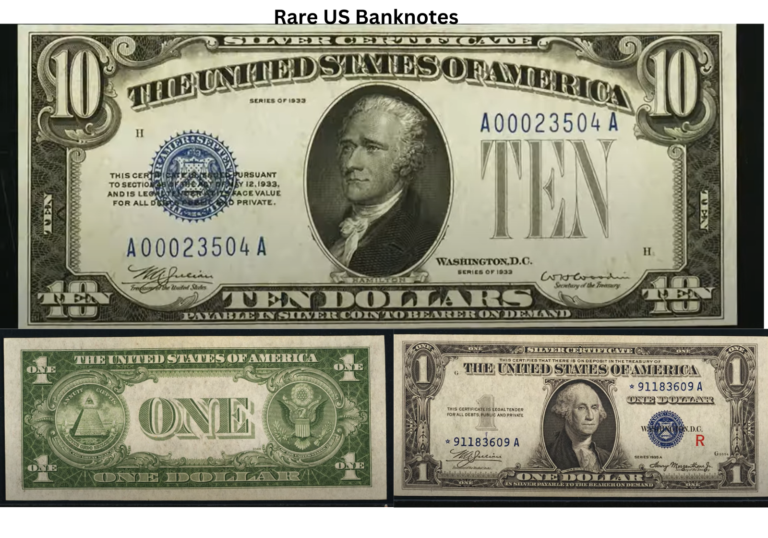
- Blue Treasury Seal
- “Silver Certificate” across the top
- “This certifies that there has been deposited in the Treasury…”
- Redeemable in silver
- Usually more collectible
- Distinct, older paper feel and layout
Why Collectors Want Them
- No longer printed
- Final U.S. notes redeemable for commodities
- Multiple design types (especially the 1928 “Funnyback”)
- wide varieties, stars, and printing anomalies
What is a $1 Blue Seal Federal Reserve Note?
A Blue Seal Federal Reserve Note is not the same as a Silver Certificate — though both use blue seals.
A Blue Seal FRN is a Federal Reserve emergency issue, primarily from:
- 1934 “Mexico/British Honduras” test notes
- 1942–1945 WWII issues (NOT to be confused with Hawaii/North Africa notes)
Key Features
- “Federal Reserve Note” at the top
- Still issued under the Federal Reserve System
- Not redeemable for silver
- Usually printed in smaller emergency batches
- Often scarcer but not always more valuable
Why Collectors Want Them
- Produced in limited numbers
- Technically experimental or emergency notes
- Distinctive blue seal in a series usually known for green seals
- Good crossover appeal for both FRN and Silver Certificate collectors
-
1899 $1 Silver Certificate – Large Size | Blue Seal | “Black Eagle”
Original price was: $616.55.$578.55Current price is: $578.55. -
1899 $2 Large Size Silver Certificate – Blue Seal | Uncirculated
Original price was: $1,501.$1,330Current price is: $1,330. -
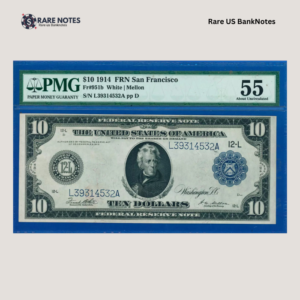
1914 $10 Federal Reserve Note – San Francisco | Fr. 951b | PMG AU 55
Original price was: $569.05.$341.99Current price is: $341.99. -
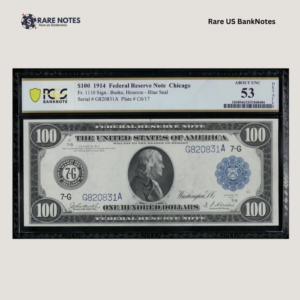
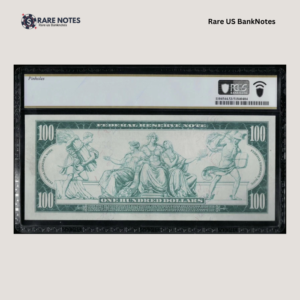
1914 $100 Federal Reserve Note – Chicago | Fr. 1110 | PCGS 53
Original price was: $3,799.05.$2,858.55Current price is: $2,858.55.


The Core Differences (Side-by-Side Comparison)
| Feature | $1 Silver Certificate | $1 Blue Seal FRN |
|---|---|---|
| Issuer | U.S. Treasury | Federal Reserve |
| Backing | Redeemable for silver | Standard fiat currency |
| Years Issued | 1878–1964 (only $1 in 1928–1957) | Limited emergency issues (1934, WWII era) |
| Seal Color | Blue | Blue |
| Primary Text | “Silver Certificate” | “Federal Reserve Note” |
| Rarity | Common to scarce (varies by series) | Scarce due to lower print runs |
| Value Range | $3–$450+ (rare higher) | $3–$300+ (rare higher) |
| Market Demand | Very high | Moderate but strong among specialists |
| Most Valuable Types | 1928 Funnyback, Star Notes | Test Notes, WWII emergency runs |
Visual Differences (How to Tell Them Apart Quickly)
Look at the Top Title
- “Silver Certificate” = silver note
- “Federal Reserve Note” = Blue Seal FRN
Look for the Redeemability Statement
Silver Certificates:
“This certifies that there has been deposited in the Treasury…payable to the bearer on demand.”
FRNs:
“This note is legal tender for all debts, public and private.”
Examine the Serial Number Prefix
Silver Certificates:
- Begin with single or double letters
- End in a letter
Blue Seal FRNs:
- Contain a district letter matching a Federal Reserve Bank
- Example: “BxxxxxxxA” for New York
Design Styles
- 1928 “Funnybacks” – bold word “ONE” on reverse
- 1957 Series – most common Silver Certificate, green reverse like modern notes
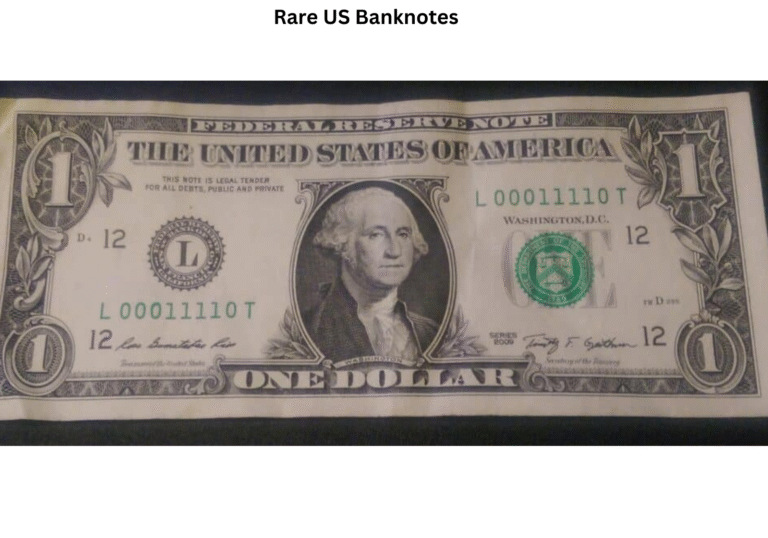
- Blue Seal FRNs – look similar to standard FRNs but with a blue seal
Value Guide: $1 Silver Certificate Prices
Values vary by grade, rarity, plate numbers, star notes, and signatures.
1928 Silver Certificate (Funnyback) Values
| Grade | Value |
|---|---|
| Circulated | $15–$45 |
| AU | $60–$110 |
| Uncirculated | $130–$350 |
| Star Note | $350–$750+ |
1934 Silver Certificate Values
| Grade | Value |
|---|---|
| Circulated | $6–$15 |
| AU | $20–$40 |
| Uncirculated | $45–$95 |
| Star Note | $90–$260+ |
1957 / 1957A / 1957B Values
| Grade | Value |
|---|---|
| Circulated | $3–$6 |
| AU | $7–$10 |
| Uncirculated | $12–$24 |
| Star Note | $30–$95+ |
Value Guide: $1 Blue Seal Federal Reserve Notes
These are more specialized. Many collectors don’t know they exist, so demand is niche.
1934 Blue Seal FRN (Test Notes)
| Grade | Value |
|---|---|
| Circulated | $12–$35 |
| AU | $40–$75 |
| Uncirculated | $80–$150 |
| Star Note | $150–$300+ |
WWII Blue Seal Emergency FRNs
(Non-Hawaii, Non-North Africa notes — extremely limited runs)
| Grade | Value |
|---|---|
| Circulated | $10–$30 |
| AU | $35–$60 |
| Uncirculated | $70–$140 |
| Star Note | $150+ |
Rarity Factors That Affect Both
Both types increase in value when:
1. Star Notes
Star replacements almost always bring a premium.
2. Low Serial Numbers
Examples like 00000025 or 00001234 can multiply a value.
3. High-Grade Examples (Choice Uncirculated, GEM 65–68)
Collectors aggressively buy crisp, original paper.
4. Errors
- Misaligned printing
- Ink smears
- Overprints
- Cutting errors
- Foldovers
These can multiply the value 2× to 50×, depending on severity.
Which One Is More Valuable Overall?
In general:
Silver Certificates tend to be more valuable because:
- They are older
- They were redeemable in silver
- They have a higher demand
- Many beginners seek them as “first collectible notes.”
Blue Seal FRNs can be VERY valuable WHEN:
- They are rare test notes
- They are WWII emergency printings
- They have star serials
- They grade Uncirculated or higher
Which Should You Collect First?
Most collectors start with Silver Certificates, especially:
- 1928 Funnybacks
- 1957 Star Notes
- High-grade 1934 Silver Certificates
But Blue Seal FRNs are excellent for a specialized collection with fewer competitors.
Where to Sell or Buy These Notes
- Rareusbanknotes.com
- eBay
- Heritage Auctions
- Stack’s Bowers
- GreatCollections
- Local currency dealers
Pro tip: Always store notes in Mylar currency sleeves to preserve value.
-
1899 $1 Silver Certificate – Large Size | Blue Seal | “Black Eagle”
Original price was: $616.55.$578.55Current price is: $578.55. -
1899 $2 Large Size Silver Certificate – Blue Seal | Uncirculated
Original price was: $1,501.$1,330Current price is: $1,330. -
1899 $2 Silver Certificate – “Mini Porthole” | PMG 25 | Bright & Attractive
Original price was: $712.50.$624.15Current price is: $624.15. -
1899 $2 Silver Certificate – Mini Porthole | Fr.256 | PCGS-Certified
Original price was: $503.50.$478.33Current price is: $478.33.


Final Summary
Silver Certificates and Blue Seal FRNs look similar, but:
- Silver Certificates are older, linked to silver redemption, and more widely collected.
- Blue Seal FRNs are emergency/test issues from the Federal Reserve with niche rarity.
Both have collectible potential, but Silver Certificates dominate the beginner and intermediate market, while Blue Seal FRNs appeal to specialists and high-grade portfolio collectors.